News

Advice to Employers on the use of Blended Learning in First Aid Training
"Blended learning is an accepted means by which workplace first aid training can be delivered. It is important that Employers conduct the necessary additional checks (due diligence) to decide if staff should be trained in first aid using this method (a combination of electronic distance based and face to face classroom based instruction)."
"Employers should also ensure they are complying with Regulation 13 of the Health and Safety Management Regulations 1999, which has a requirement to ensure adequate time is set aside during the
working day to undertake any first aid training employees receive. HSE Guidance document GEIS3 will be updated to reflect this change."
Golbourn Training Solutions under our Nuco Centre will be developing a blended learning programme. This is a major development and all instructors will be offered a choice of training programmes to
offer your customers, including a number of short videos to support your classroom based teaching. This is still in the early stages, but please be rest assured that when it is ready it will be of
the highest quality.
We will keep you up to date of developments.
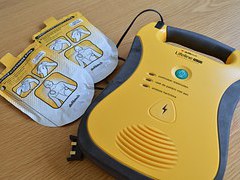
Training on Defibrillators to now included on the EFAW and FAW Syllabus
"Changes to Resuscitation Council UK guidelines on cardiopulmonary resuscitation (CPR) in October 2015 mean that HSE will now be revising the Emergency First Aid and First Aid at Work syllabuses. The revision will require all workplace first aiders to be trained in the use of an automated external defibrillator (AED) from the 31 December 2016, as the Resuscitation Council UK guidelines now state that the management of a casualty requiring CPR is to request an AED.
It is sensible to ensure that EFAW and FAW first aiders are trained in AED use as they are now available within many workplaces and public spaces. There is good evidence that the early use of an AED has a far more beneficial outcome for the casualty than if that intervention is delayed.
For employers this does not mean you have to purchase a defibrillator for your workplace as the requirement for a defibrillator is still dependent on your needs assessment. Neither do you have to retrain all your existing first aiders as they will be updated in this skill when they requalify.
For those who deliver EFAW and FAW training the change means that you should ensure that students are trained and assessed on how to use an AED from the 31 December 2016 within the existing timeframe allowed for the delivery of either EFAW or FAW training. HSE has no objection if training providers wish to adopt this change before the 31 December."
Golbourn Training Solutions under our Nuco Centre will ensure that this deadline (31st December 2016) is met.
As you can no doubt appreciate this affects a large number of qualifications and is a considerable project as it affects books, training notes, PowerPoint presentations, assessment papers and supporting marketing materials.
Until new programme is introduced, we will continue to teach the programme as we do now.
We will inform you as soon as the changes have been made.
NB: There will be no changes to the units or qualifications, just the training that is delivered.
However, the practical assessment paper will include a small element relating to the use of the AED. No additional specific training is necessary for you.
This will in no way affect the current AED qualifications that we offer.
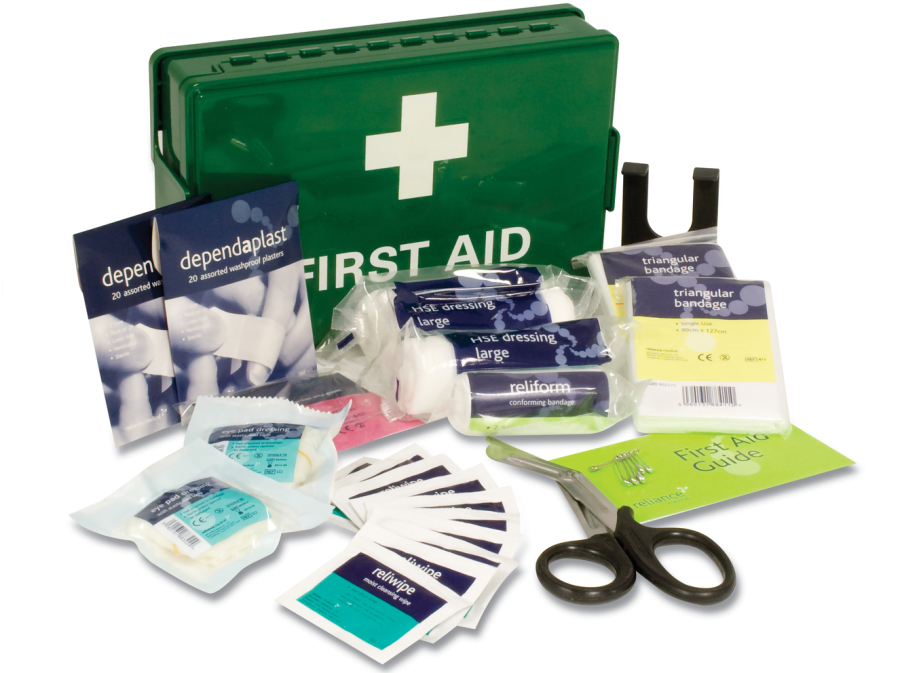
Employers and First Aid Kits
"The recent European Resuscitation Council review of a number of first aid protocols suggests there is a need in certain circumstances for first aid kits to contain haemostatic dressings and tourniquets. The view of HSE is that the inclusion of these items is based on your First Aid Needs Assessment.
Where your needs assessment has identified a requirement for tourniquets and/or haemostatic dressings you should make sure:
Your haemostatic dressings are always in date;
Workplace first aiders are trained by a competent provider in when to apply a tourniquet and the correct technique to use. For example, competent training providers should be teaching clinical
protocols as described by the Faculty of Pre Hospital Care; and,
Workplace first aiders have training in when and how a haemostatic dressing is applied.
Examples of sectors that may benefit from additional training in the use of tourniquets based on RIDDOR data include: construction, agriculture, forestry and some aspects of manufacturing."
Golbourn Training Solutions under our Nuco Centre will be offering specific CPD training relating to the use of tourniquets and haemostatic dressings.
Although it will NOT be mandatory to teach this method of controlling blood loss, it may well help you if you offer training to hazardous, high-risk businesses.
Check back here regularly to find out what's going on at Golbourn Training Solutions.
Health and safety statistics 2016
Published online 2 November the latest statistics on work-related health and safety in Great Britain and includes the following key annual figures (2015/16):
- 1.3 million working people suffering from a work-related illness.
- 2,515 mesothelioma deaths due to past asbestos exposures (2014).
- 144 workers killed at work.
- 72,702 other injuries to employees reported under RIDDOR.
- 621,000 injuries occured at work according to the Labour Force Survey.
- 30.4 million working days lost due to work-related illness and workplace injury.
- £14.1 billion estimated cost of injuries and ill health from current working conditions (2014/15).
The Health & Safety Executive (HSE) have just released a First Aid bulletin, with three important statements.
THINGS TO REMEMBER 2017
Good Housekeeping
Winter is coming - Check grit bins and equipment to be ready
Conduct staff training
Review needed Risk Assessments
Fault Reporting and Incident Handling
 Print
Print 